

For homeowners across the United States, the most important question about going solar is simple: how much money can I actually save?
While environmental impact and energy independence are meaningful benefits, the financial return is what ultimately drives most residential solar decisions. Understanding potential monthly savings, long-term cost reductions, and overall return on investment is essential before installing solar panels.
This guide explains how solar savings work in the U.S., what determines your actual financial outcome, how long it takes solar panels to pay for themselves, and how to calculate your personalized savings using modern AI-powered solar tools like Future Solar AI.
How do solar panels reduce your electricity bill?
Solar panels generate electricity from sunlight and allow homeowners to offset a portion of the energy they would otherwise purchase from their utility provider. When your solar system produces electricity during daylight hours, your home consumes that energy directly. This reduces the amount of power you need to buy from the grid.
If your system produces more electricity than you use during certain hours, the excess energy may be exported to the grid or stored in a battery system depending on your configuration and local utility structure.
The financial principle is straightforward: the more grid electricity you replace with self-generated solar power, the more you reduce your monthly electricity bill.
In states with higher electricity rates, this offset can translate into significant long-term savings over the lifetime of the system.
How much can solar panels save per month?
Monthly solar savings vary depending on multiple variables that are unique to each property. There is no universal number that applies to every home.
Your potential monthly savings depend on:
- Your current electricity rate per kilowatt-hour
- Your average monthly electricity consumption
- The size and production capacity of your solar system
- Your geographic location and sunlight exposure
- Your financing structure
Homes with higher electricity bills often experience larger dollar savings because they offset more grid consumption. Conversely, smaller energy users may see more moderate monthly reductions but still benefit from long-term price stability.
To calculate accurate monthly savings, a customized solar system design is required. Generic online averages cannot account for roof angle, shading, or local irradiance data. This is why platforms like Future Solar AI generate AI-powered solar savings projections based on your specific address and energy profile.
Is solar worth it financially in the United States?
Solar is financially beneficial when the total energy savings over time exceed the total cost of the system. This calculation depends heavily on your electricity rate environment and system performance.
Key financial factors include:
- Initial installation cost
- Available federal tax incentives
- Projected annual energy production
- Local utility rate escalation
- Financing structure or loan terms
Electricity prices in many parts of the United States have increased over time. By generating your own electricity, you reduce exposure to future utility rate increases and create greater long-term cost predictability.
Whether solar is worth it for your home depends on how much of your bill you can offset and how quickly those savings accumulate relative to your system investment.
How long does it take for solar panels to pay for themselves?
The payback period represents the number of years required for cumulative electricity savings to equal the total system cost.
Payback timelines vary based on:
- System size
- Local electricity pricing
- Federal tax incentives
- Financing interest rates
- System production efficiency
Homes in regions with higher electricity costs and strong solar exposure typically reach payback sooner than those in lower-rate markets.
Rather than relying on national averages, homeowners should use property-specific modeling tools to estimate their personalized break-even timeline. Future Solar AI integrates automated roof analysis and energy modeling to generate these projections instantly.

What factors influence your long-term solar savings?
Solar savings are influenced by both controllable and external variables. Understanding these drivers helps homeowners evaluate long-term financial outcomes more accurately.
Electricity rate structure
Higher utility rates increase the financial value of each kilowatt-hour you generate yourself. In regions where electricity costs are rising, solar can serve as a hedge against future price increases.
System design and production efficiency
An optimized solar panel layout that maximizes sunlight exposure improves energy generation and accelerates savings accumulation.
Battery storage integration
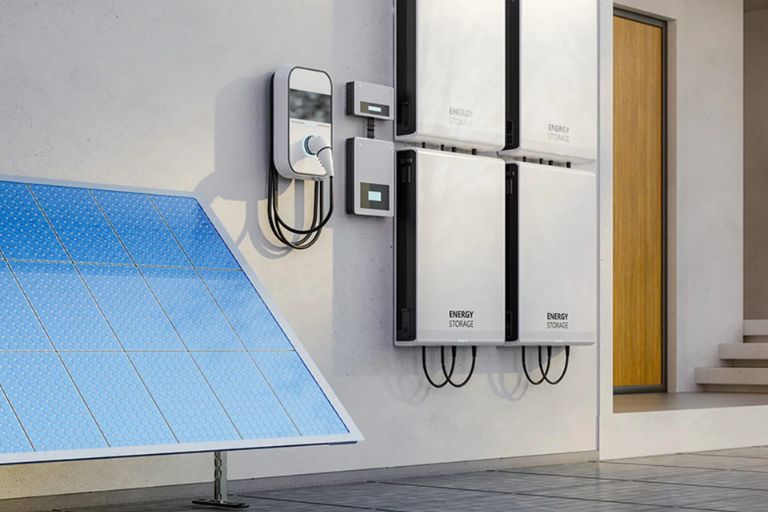
Battery systems allow homeowners to store excess solar energy for use during peak rate periods or grid outages. While batteries add to system cost, they can enhance energy independence and strategic energy usage.
Financing structure
Cash purchases, solar loans, and other financing structures affect how quickly net savings accumulate. Financing terms can shift early-year cash flow while preserving long-term cost reduction.
Future Solar AI evaluates these financial and structural variables during the instant quote process, helping homeowners understand projected outcomes before committing to installation.
How accurate are solar savings calculators?
Modern solar savings calculators use advanced irradiance data, satellite roof modeling, and projected energy consumption inputs to generate estimates.
While no calculator can predict future electricity rates with absolute certainty, AI-powered solar design tools are significantly more accurate than generalized national averages.
Future Solar AI uses automated modeling engines to calculate system capacity, projected production output, and cost offset scenarios based on real structural data rather than simplified assumptions.
This approach produces a more reliable starting point for evaluating whether solar panels make financial sense for your home.
Do solar panels increase home value?
Beyond monthly electricity savings, many homeowners wonder whether installing solar panels can increase the resale value of their property. The answer depends on several factors, including market demand, local electricity costs, and whether the system is owned or financed.
In many U.S. housing markets, energy-efficient homes are increasingly attractive to buyers who prioritize lower operating costs and long-term utility savings. A property with an existing solar energy system may offer predictable electricity expenses, which can become a differentiating factor during the selling process.
Owned solar systems are generally viewed more favorably than leased systems because they represent a transferable asset rather than an ongoing contractual obligation. Buyers often evaluate whether the system reduces their expected monthly electricity expenses and how much useful lifespan remains.
However, the impact on home value is not uniform nationwide. Real estate pricing depends on regional demand, local energy rates, and buyer awareness of solar benefits. In markets where electricity costs are high, solar installations may carry greater perceived value.
Ultimately, while solar panels are primarily installed to reduce energy expenses, they may also enhance property appeal in competitive markets. Evaluating both monthly savings and long-term asset value provides a more complete financial picture.
How can you calculate your personalized solar savings?
The most reliable way to determine your potential solar savings is through a customized system design and pricing estimate.
To calculate your savings accurately, you need:
- Your monthly electricity usage
- Your roof’s solar exposure and layout
- Local irradiance data
- System cost and financing structure
Future Solar AI allows homeowners to generate an instant solar quote online by entering their property information. Within minutes, you can review:
- A tailored solar panel layout
- Projected monthly savings
- Estimated annual energy production
- Transparent system pricing
- Financing breakdown options
This data-driven approach replaces guesswork with clarity, helping homeowners evaluate solar from a financial perspective before making a decision.
Taking the next step toward lower energy costs
If your goal is to lower your electricity bill, reduce exposure to rising utility rates, and improve long-term cost predictability, solar panels may offer a strategic solution.
Understanding your potential savings requires more than averages or online speculation. It requires property-specific modeling and transparent pricing.
Future Solar AI provides AI-powered solar system design and instant savings projections across the United States, giving homeowners a practical way to evaluate solar based on real numbers.
For many households, the first step toward energy cost control begins with an accurate, personalized solar quote.
